



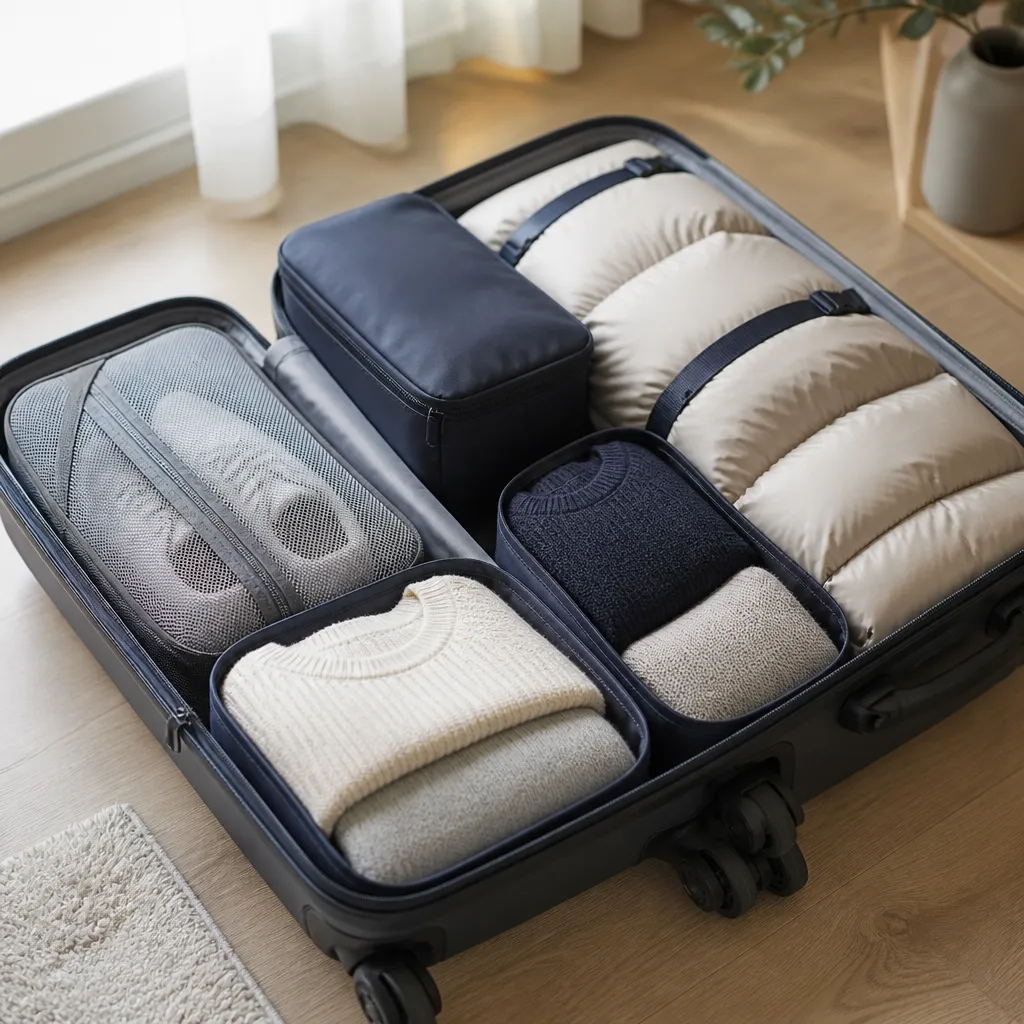
Winter trips punish careless packing. A puffer coat can take up half a carry-on, wet boots soak the clothes next to them, and a phone can die by lunchtime when the temperature drops. The right travel accessories solve most of these problems before you leave home. Below are seven items we recommend for cold-weather trips, based on what holds up in real use and the packing mistakes we see most often from shoppers taking their first snowy getaway.
Table of Contents
- Quick Takeaways
- Compression Packing Cubes for Bulky Winter Layers
- Shoe and Wet-Gear Bags That Keep Dampness Contained
- A Travel Organizer for Documents, Cords, and Small Items
- A Leak-Proof Toiletry Kit for Dry Winter Air
- A Power Bank and Cold-Ready Charging Kit
- A Foldable Daypack for Snow Days
- A Luggage Scale and Bag Tags for Heavy Winter Bags
- Frequently Asked Questions
- References
Quick Takeaways
| Key Insight | Explanation |
|---|---|
| Pack by category, not by outfit | Separate cubes for tops, bottoms, and underwear make repacking fast when layers come off mid-trip. |
| Measure your bag before buying cubes | Oversized cubes waste space, and undersized ones leave a puffy coat bulging out of the zipper. |
| Isolate boots and wet gear | A ventilated shoe bag keeps snowmelt and road salt away from clean clothes. |
| Keep documents and cords in one hard-sided organizer | Digging for a charger in a cold hotel room at night wastes time you could spend outside. |
| Carry your power bank on board | Cold temperatures drain batteries faster, and airlines generally expect spare lithium batteries to stay in the cabin. |
| Weigh winter bags before you reach the airport | Coats, boots, and a second pair of shoes add weight quickly, and a luggage scale catches problems at home. |
Compression Packing Cubes for Bulky Winter Layers
Packing cubes are the single most useful accessory for a cold-weather trip, and the reason is simple: winter clothing is bulky. One insulated jacket can fill more space than three days of shirts, so organizing by category keeps the bag manageable. In practice, we suggest one cube for tops, one for bottoms and sleepwear, and one for underwear and socks.
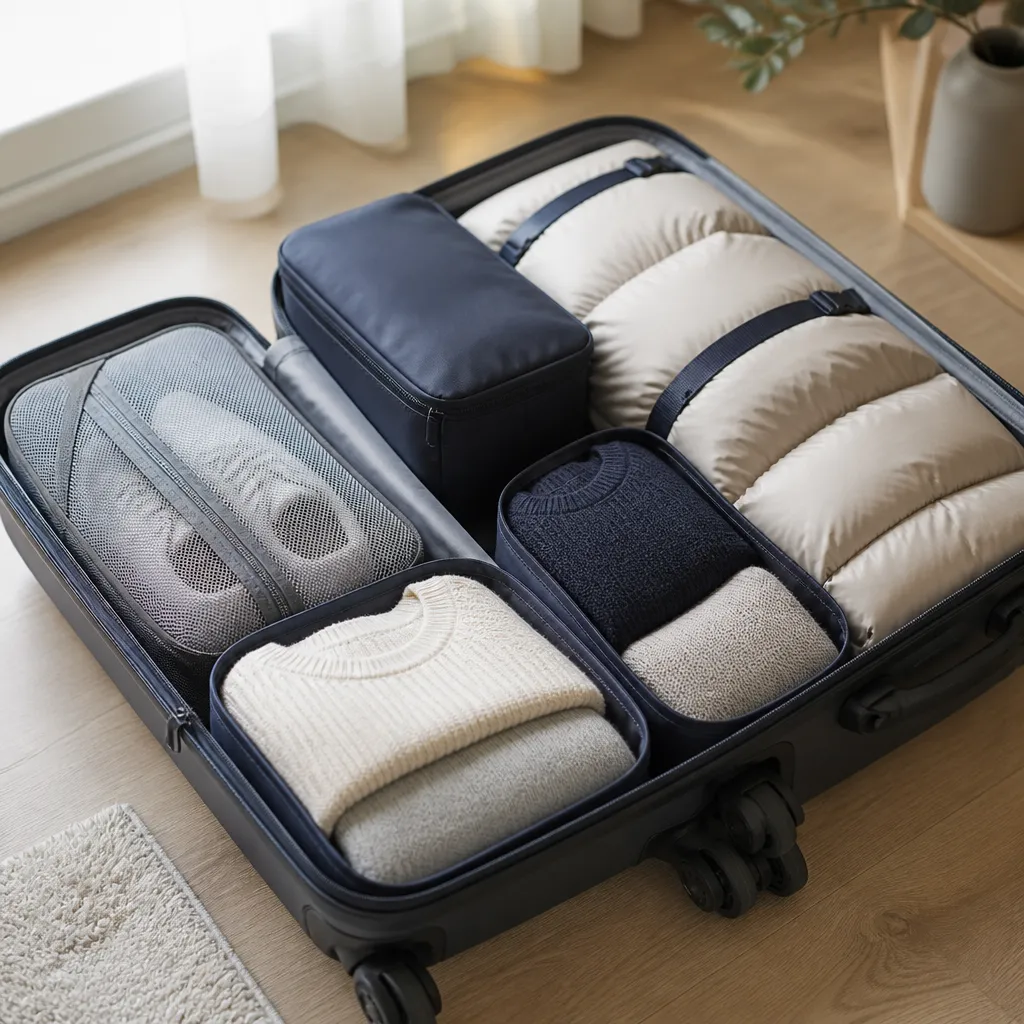
Compression cubes add a second benefit. A zippered cube with a compression panel squeezes air out of puffy layers, often freeing enough room for a pair of boots. Standard mesh cubes sort your gear well but will not shrink a down jacket, so read the product details before you buy. Shipping across the United States is free with no minimum purchase, so you can order a missing cube before departure without adding to your trip budget.
Choosing Cubes That Fit Your Bag
Measure your bag before you shop. Cubes sized for a small suitcase will rattle around inside a larger duffel and waste the space you were trying to save. Look for at least one large cube for outerwear, because the small pouches in most sets are too short for a parka.
Comparing Common Packing Approaches
Three methods come up most often with winter travelers. The table below shows where each one works best and where it falls short.
| Approach | Best For | Main Trade-off |
|---|---|---|
| Compression packing cubes | Bulky jackets, sweaters, and multi-day trips | Heavier than mesh cubes, with more zippers to manage, and compressed fabric can wrinkle |
| Standard mesh packing cubes | Mixed-weight trips and frequent repacking | Saves little space on puffy layers |
| Rolling clothes loose in a duffel | Short trips with few layers | Items shift and wrinkle, and finding one specific piece takes longer |
Pro tip: Put your heaviest layers in the cube closest to the back panel of your bag. This keeps the weight centered and stops the bag from pulling on your shoulders in an airport line.
Shoe and Wet-Gear Bags That Keep Dampness Contained
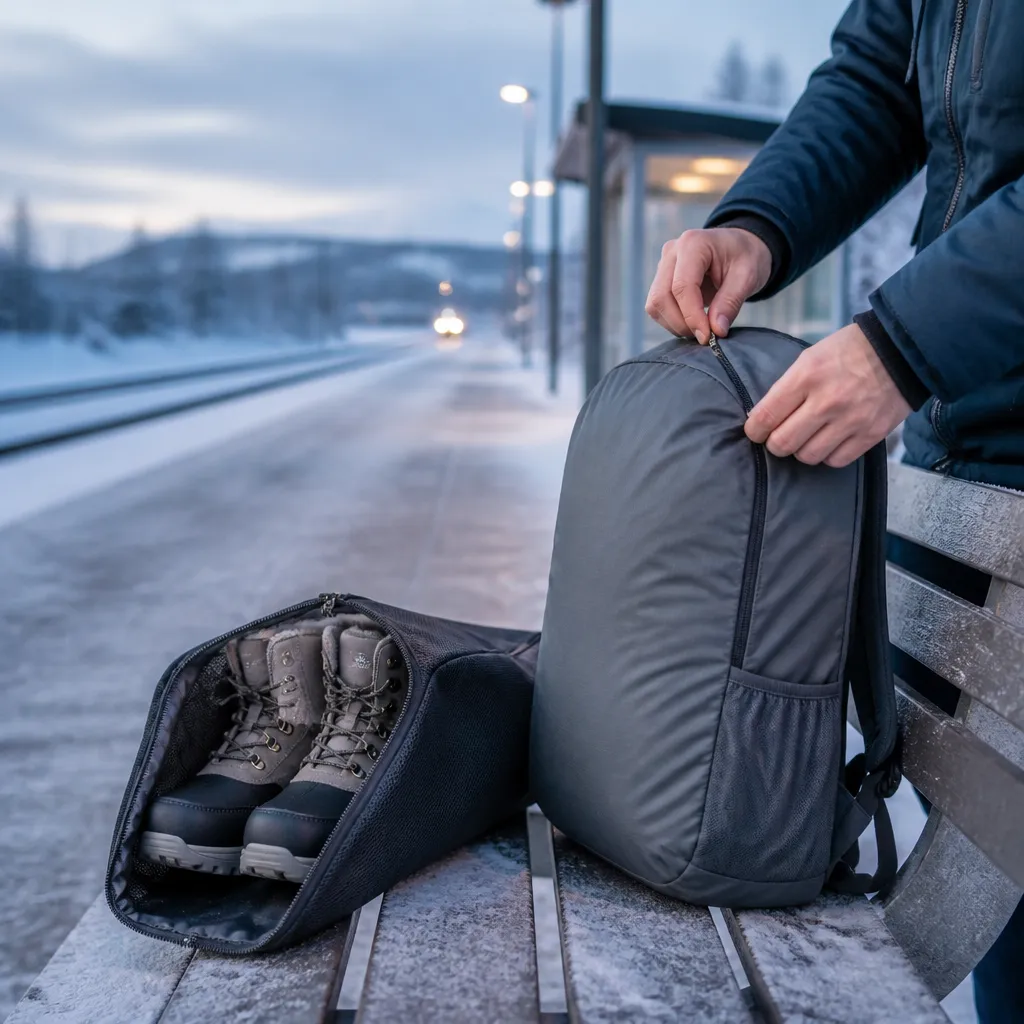
Winter footwear is the item travelers underestimate most. Boots are heavy, they carry road salt and snowmelt, and they release moisture into everything around them. A dedicated shoe bag keeps that moisture away from your clothes and keeps the rest of your packing dry.
Look for a bag with a water-resistant outer shell and a separate ventilated compartment. A fully sealed pouch traps damp air, and the boots can smell after a single night. A vented design lets them dry out between uses, which matters on trips longer than a weekend.
What to Look for in a Wet-Gear Bag
Choose a bag with a drawstring or zip top large enough for snow boots without crushing their shape. Handles and an outside pocket help when you move between a cold car, a terminal, and a warm hotel lobby in the same hour.
Where to Put Wet Items on Arrival
Unpack wet gloves, hats, and scarves first, and hang them where air can move. A common mistake is leaving them balled up in a cube overnight, which invites mildew and odor. Dry them before they go back into your packing system.
Pro tip: Place a single dryer sheet inside the shoe bag to reduce odor between wears. Replace it on longer trips, since it loses effect with use.
A Travel Organizer for Documents, Cords, and Small Items
A travel organizer solves a different problem than a packing cube. Cubes hold clothes, while an organizer holds the small things that disappear in a winter bag: passports, boarding passes, earbuds, cables, hand warmers, and liner gloves. When those items are scattered, every airport checkpoint turns into a search.
A hard-sided organizer with clear sections works better than a soft pouch for this job. Compartments keep cords from tangling, and a firm shell protects a phone or tablet from being crushed under a heavy coat. Because the organizer stays in your personal bag, it stays with you during the trip.
What Belongs in the Organizer
Keep documents in a single sleeve, and keep electronics in a separate zipped section. Add a small pouch for winter accessories you might need quickly on arrival, such as liner gloves or a lip balm, so you can reach them without unpacking your whole bag.
Fitting It Into a Winter Carry-On
Most people fill their carry-on with coats and forget that the organizer needs a home too. Plan to place it in the top section or a front pocket where you can reach it without opening the main compartment. Blockquote placeholder below.
Winter packing usually fails at the small items, not the large ones. The pouches you can reach without thinking are what make a trip feel organized.
A Leak-Proof Toiletry Kit for Dry Winter Air
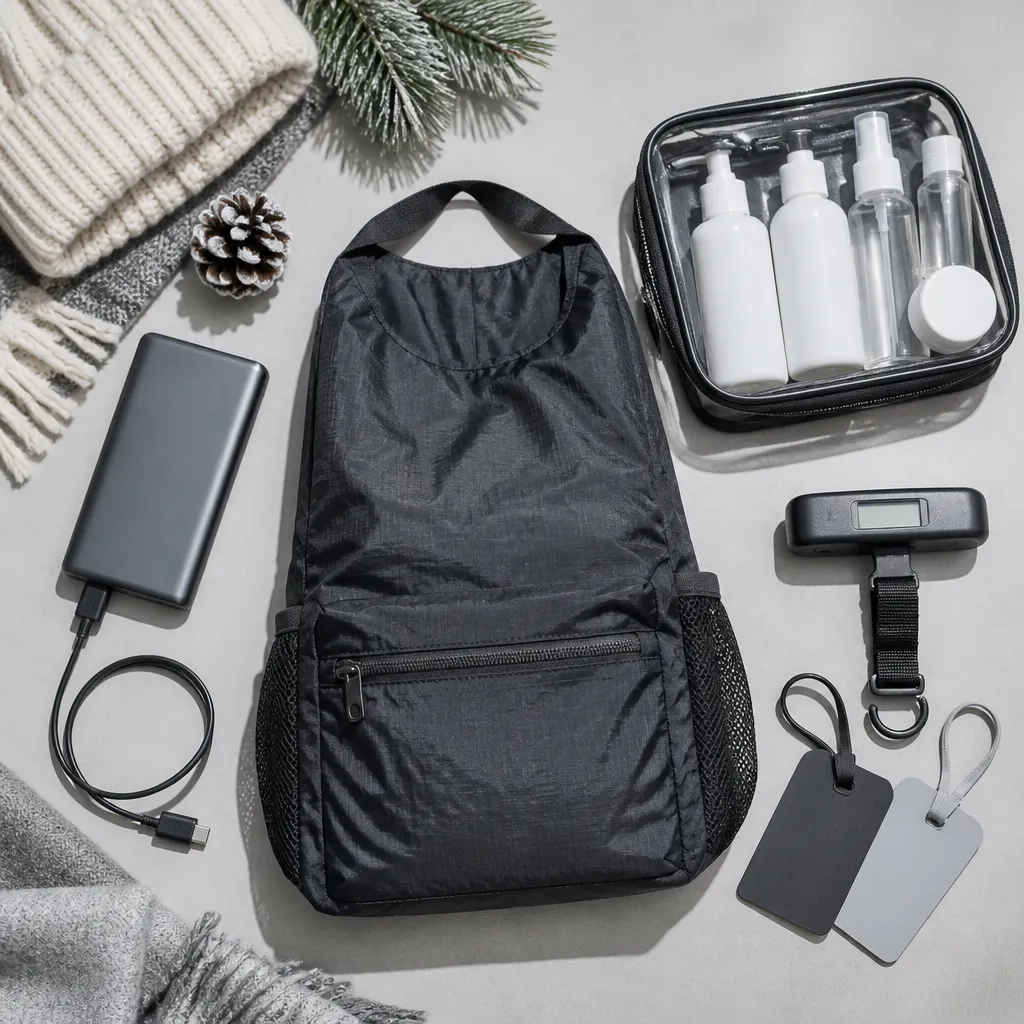
Cold, dry air pulls moisture out of skin and lips faster than most people expect, so winter trips tend to bring more lotions, balms, and lip products than summer ones. Those products also tend to leak in a bag that gets squeezed between a coat and a pair of boots. A dedicated toiletry kit with a leak-resistant interior protects everything else you packed.
Choose a kit with a waterproof or wipe-clean lining and a clear window or mesh pocket. You want to see every bottle without unzipping the whole bag. This matters at security checkpoints, where you will need to pull out liquids quickly. The rules for carry-on liquids are set by the TSA, so check the current container limits before you pack.
Travel-Size Products That Work in Cold Weather
Pack a thicker moisturizer, a lip balm with sun protection, and a hand cream you can use on dry knuckles after a day outdoors. Decant products into small leak-resistant bottles rather than carrying full-size containers that you may only use halfway.
Protecting Against Leaks Inside the Bag
Store bottles upright and wrap caps with a strip of plastic film before closing them. A common mistake is packing a lotion bottle on its side in a cube, which turns a small crack into a sticky mess by the time you land.
A Power Bank and Cold-Ready Charging Kit
Winter drains phone batteries quickly. Cold temperatures temporarily reduce how much power a battery can deliver, and a phone running navigation, photos, and hotel bookings in the cold can drop fast. A reliable power bank is one of the few accessories that protects your plans in a bad moment.
Choose a power bank with enough capacity to recharge your phone at least once, and bring a short cable for each device you carry. A single cable you borrow from the hotel desk usually has the wrong connector, so bring your own.
Why Batteries Drain Faster in the Cold
Cold reduces battery performance, so a phone can show a higher charge level than it can actually deliver. Keep your phone inside your jacket when you are outdoors, and keep the power bank in a pocket close to your body. Warmth helps both devices work as expected.
Rules for Carrying Spare Batteries
Spare lithium batteries generally need to stay in the cabin rather than a checked bag. Check your airline’s current policy before you fly, because rules for battery size and quantity vary by carrier.
Pro tip: Keep the power bank in an inside pocket of your daypack or coat during the flight. You can reach it quickly if a gate change or delay drains your phone earlier than expected.
A Foldable Daypack for Snow Days
A winter getaway usually includes at least one day outside, whether that means a walk through a ski town, a long afternoon at an outdoor market, or a hike to a viewpoint. A foldable daypack carries the layers you remove during the day, the water bottle, and the camera without forcing you to lug your suitcase along.
Fold-up daypacks earn their place because they collapse flat inside a suitcase. Once packed, they add almost no bulk to the trip, and you can unfold one on arrival and use it for the rest of your stay.
Size and Weight Matter More Than Features
A daypack should hold a jacket, a water bottle, a small first-aid kit, and a power bank without bulging. Larger packs tend to get overfilled on winter trips, and the extra weight shows up on your shoulders by the afternoon.
Carrying Layers Off the Hotel Floor
Look for a pack with a stretchy side pocket or external straps for a hat and gloves. Winter layers come off quickly, and an outside attachment keeps them from getting lost in the main compartment.
A Luggage Scale and Bag Tags for Heavy Winter Bags
Winter bags get heavy faster than summer bags. Coats, boots, and extra shoes can push a suitcase well past what you planned, and most airlines charge for checked bags that exceed their limits. A portable luggage scale lets you weigh the bag at home, where adjusting is easy, rather than at the check-in counter.
Choose a digital scale with a hook and a clear display. Mechanical models can be harder to read when the bag is hanging in a dim hallway, and you will want the number fast before you close the zipper.
Why Winter Bags Run Overweight
Most overweight bags are not overweight because of one large item. The problem is usually a pile of small additions, like a second pair of boots, a heavy book, or a full toiletry kit. Weigh the bag once fully packed, then remove one item at a time until you are under the limit.
Bag Tags and Clear Sleeves
Use a bag tag with your name, phone number, and a secondary contact on the inside. Add a clear sleeve with a printed itinerary so an agent can find your details even if the outer tag tears in transit.
Pro tip: Weigh your bag again after you pack the day’s souvenirs or gifts. Winter trips tend to add weight on the way home, and a second check catches the problem before it reaches the airport.
Frequently Asked Questions
Do I need packing cubes for a short winter trip?
Yes, even for a three-day trip. Cubes keep layers separate so you can find a sweater quickly without unpacking the whole bag, and they make the return trip much tidier.
What size packing cube works best for a winter carry-on?
Choose one large cube for outerwear and two or three smaller cubes for everything else. Measure your bag first, because a cube that is too large will bulge and a cube that is too small will leave room unused.
Can I pack a power bank in my checked luggage?
Generally no. Spare lithium batteries are usually required to stay in the cabin, so keep your power bank in your carry-on or personal bag. Confirm your airline’s current policy before you travel.
How do I stop wet boots from making my suitcase smell?
Use a ventilated shoe bag, let the boots air out on arrival, and avoid sealing them in plastic for long periods. A dryer sheet inside the bag can help with odor between wears.
Is a travel organizer worth it if I only fly once a year?
Yes, because the cost is small compared with the time lost searching for documents and chargers. A hard-sided organizer also protects electronics better than loose pouches, which matters more in a cold, crowded airport.
Tell us in the comments which of these travel accessories has made the biggest difference on your cold-weather trips, and what you would add to this list.
We would love your feedback and any insights you would share with others. What perspective would you add?